

Goats in Trees, Grandma's Noodles, and Other Reasons People Ask Me Where to Go
By Miltos Vafiadis
Διαβάστε το και στα ελληνικά.
Friends ask me where to go. Colleagues ask. Friends of colleagues ask, which is how you know a thing has become a small unpaid job. And a surprising number of them ask about cities I have never been to, which used to confuse me until I understood what was actually being requested. Nobody needs another database. The internet has databases. What people want is a filter — someone whose taste they can borrow for a weekend.
So here is the filter, out loud, in ten stops. Every one of them is a real trip, and every one of them explains a rule I now apply everywhere.
1. The layover is not dead time. It's a course.
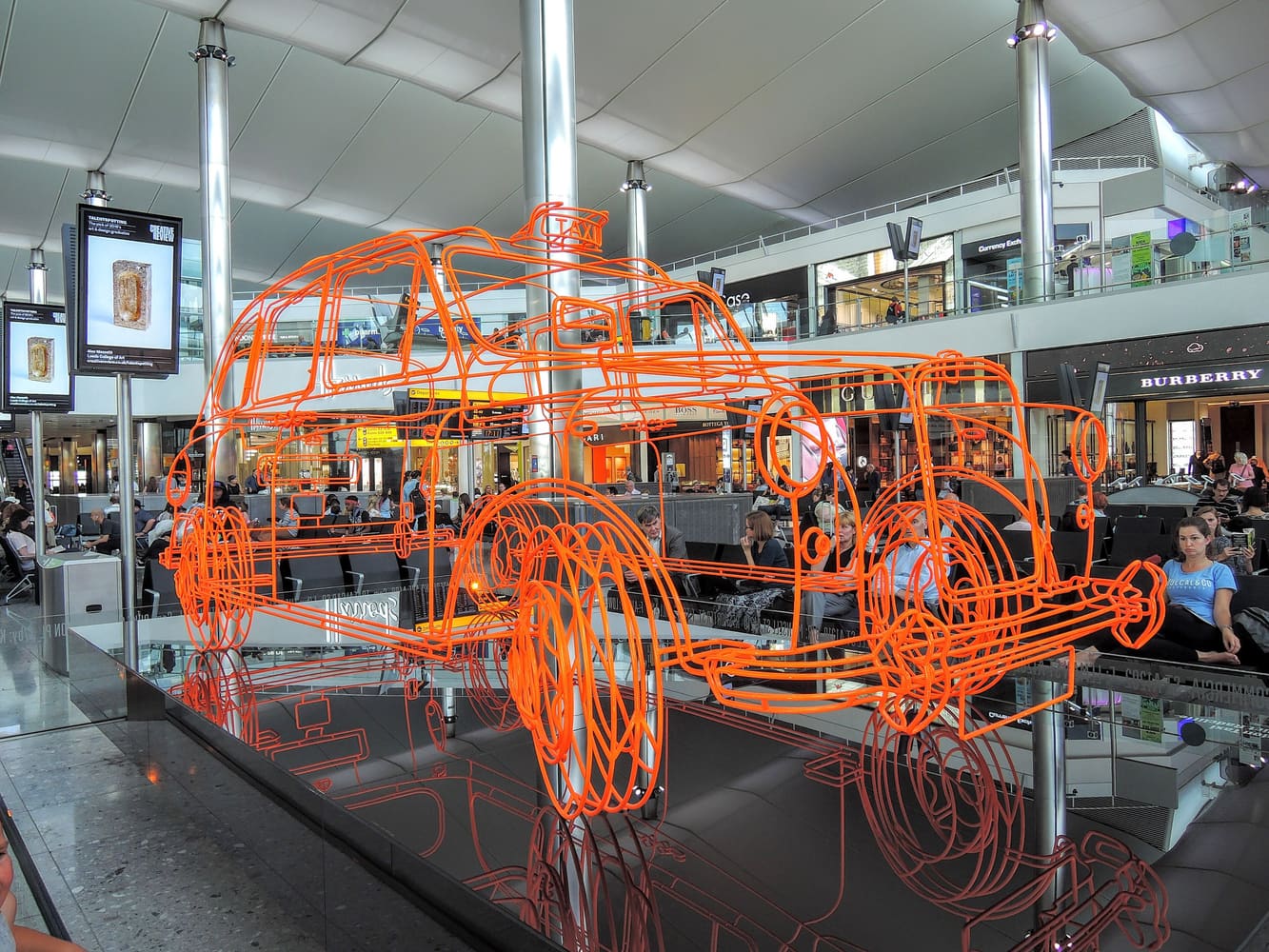
Heathrow Terminal 2, where I once spent three deliberate hours doing laps.
Most people treat a layover as dead time to be minimised. I treat it as a course, and Heathrow's Terminal 2 is where I've taken that furthest — because a Star Alliance Gold card is a key to several lounges there, and there is no rule that says you have to use the nearest one.
I was flying to Europe that day, which meant my gate was in the main building: close, convenient, boring. So I went the other way — down into the long underground tunnel out to the satellite terminal.
Here is the part that matters, and the part I knew before I set off, because someone had written it up on a frequent-flyer blog: the travelators in that tunnel run one way only. They carry you out to the satellite. They do not bring you back. Coming back is you, your bag, and a long walk under an airport with nothing moving but your legs.
I went anyway. The staff were kind enough to point out that my gate was, in fact, very far from where I was heading. Yes, I said. I know. That's the plan.
First stop, the Air Canada Maple Leaf lounge, for the beer. Then the United lounge, which had good food and an open bar; I skipped the shower that day, though normally that's non-negotiable, because a shower in an airport is the single most underrated luxury in travel. I had been looking forward to the Singapore Airlines lounge, and it was closed for renovation, which I took harder than a grown man should take a closed lounge.
Then the walk back. All of it, on foot, under the runways, earning every one of those lounges retroactively. Up into the main terminal and into the Lufthansa lounge — partly because it was finally near my gate, and mostly because it had a proper German pretzel, which is a perfectly respectable reason to end anything.
My travel companion had a coffee at the gate. We both waited the same three hours. Only one of us had an itinerary.
The rule it produced: transport is a destination. Cable cars, ferries, funiculars, weird terminals, a train station worth walking into for its own sake. The way there is allowed to be the good part — and knowing one specific thing about a place before you arrive, like which direction the travelators run, is worth more than any general advice about it.
2. Ask the person pouring your drink where they eat
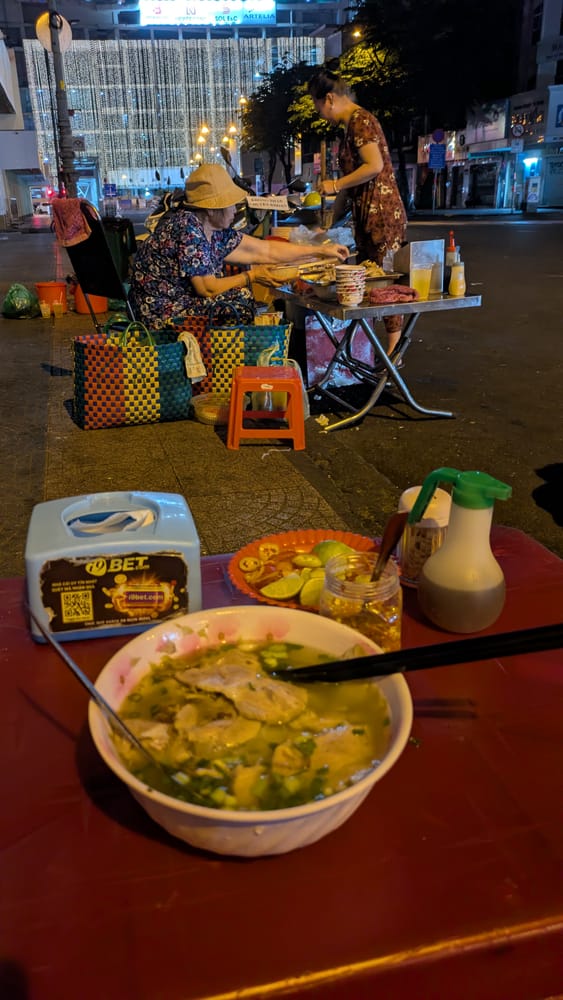
The bowl in question. The correct number of plastic stools is "some".
In Ho Chi Minh City I asked a barwoman for a restaurant recommendation and got the polite answer — the one they give tourists, the place with the English menu and the air conditioning. So I asked the better question instead: where do you eat when you finish work?
She pointed out of the window, at the corner across the wide road outside the market. That night, near midnight, we sat on plastic stools at a stall run by a grandmother who spoke no English and needed none, because she served exactly one dish and I simply pointed at it. It remains the best meal I have eaten anywhere, and it cost about 75 cents — which is to say, roughly the price of one of those 60-cent bottles of water that Greek airports are obliged to sell you, and which almost nobody knows to ask for. Two of the world's great travel bargains, and neither one is advertised.
The rule: food is king, and a menu without a translation is a good sign. Plastic stools are a great sign. Also: the second question is always better than the first.
3. Buy the argan oil
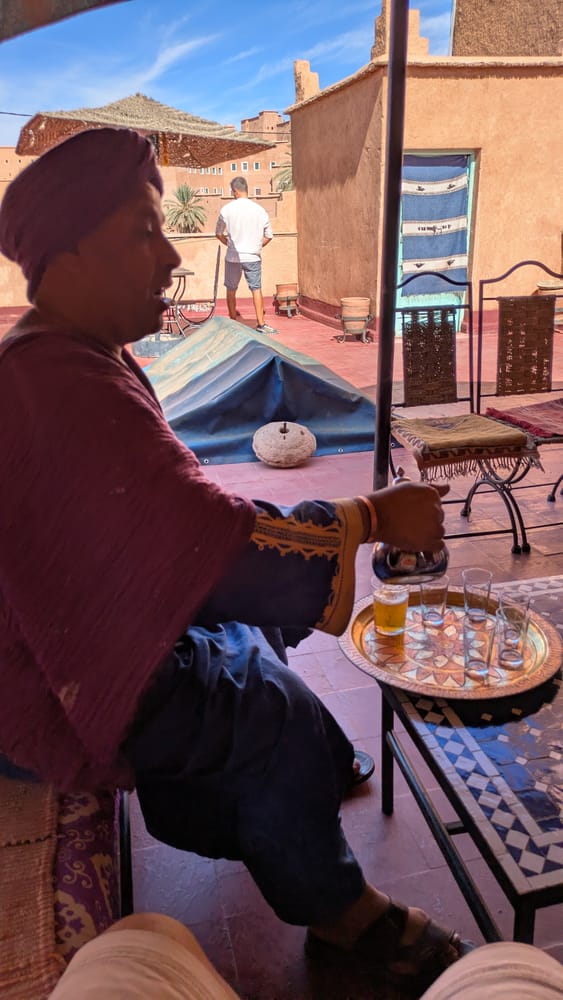
One hour. Several teas. Zero regrets.
In Morocco a merchant invited us in for tea. Then more tea. Then an hour of stories — about his family, his suppliers, the town, why one thing is worth more than another thing that looks identical to you and me.
Yes, of course it's a sales technique. It's also the best hour you'll spend that day, and there is a simple way to settle the account honestly: buy something. It costs about what a museum ticket costs, you get a story instead of a queue, and you get to hand it to someone the next time they ask what you brought back.
The rule: picks that create conversations rank above picks that create photos.
4. The detour I did not explain to anyone
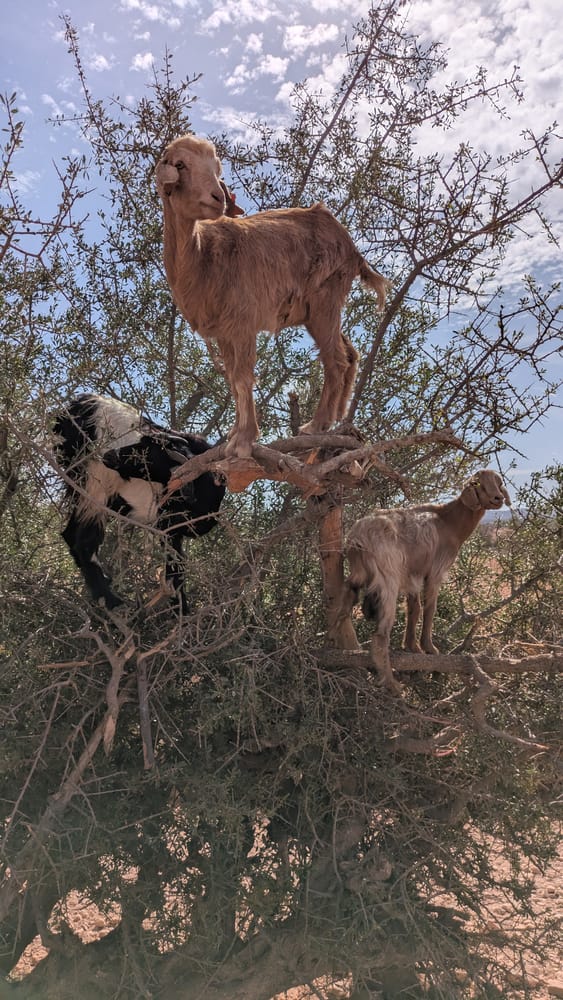
Reader, they were up there.
Somewhere on a map of Morocco, a stranger had dropped a pin and named it something like goats on argan trees. Not a sign, not a listing, not a review — a pin. A person I will never meet decided that this deserved a permanent mark on the map of the world, and I decided to believe them.
So I took the turn. I did not explain the turn. Tarmac became gravel, gravel became dirt, dirt became "is this still a road", and from the back seat came the reasonable questions: where are we going, why are we going there, how much further. I said it would be worth it, which at that point was less a promise than a mood.
Then the road ran out in the middle of nowhere. No other cars. No other tourists. No buildings. Just us, some scrubland, and a tree. And in the mirrors — and I want to be clear that this is the exact moment where a horror film cuts to the title card — figures appeared. Several of them, adults and young kids, moving quickly towards the car. Carrying goats.
They were not, it turned out, the third act of a thriller. They were a family with a business plan. Up went the goats, one by one, into the branches, arranging themselves like a poorly-organised choir. Out came the phones. In came the helpful hands: stand here, angle it like this, wait for that one to look up. And then, warmly and inevitably, the bill.
The number they opened with was ambitious. I knew it. They knew I knew it. We landed somewhere sensible, everyone shook hands, and I drove away having paid a fair price to be gently and expertly relieved of some cash by people who had, after all, delivered exactly what the pin promised.
I have zero regrets and one permanent rule out of it: nothing that treats an animal as a prop. No elephant rides, no donkey taxis, no sedated anything. Goats up there really do climb argan trees by themselves; that particular tree had a cast and a box office, and it's the reason I now ask where any "photo opportunity" actually comes from before I get excited about it.
The rule: take the detour. Pay honestly. Then be honest about what you found there.
5. The famous one, sideways
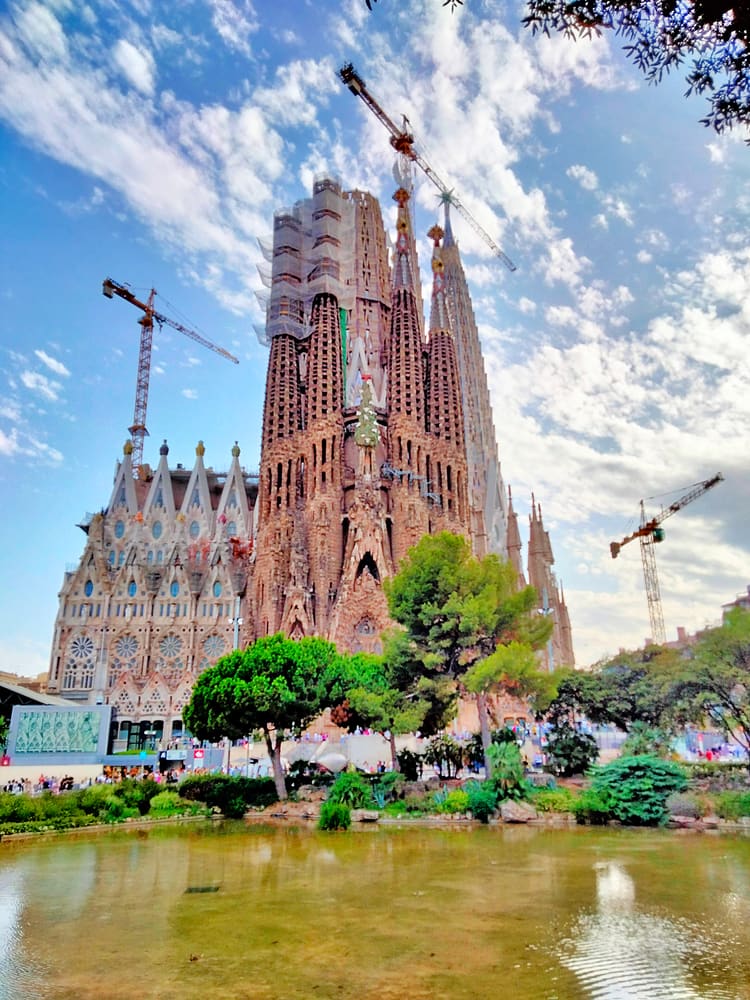
Best seat in Barcelona. Costs nothing.
I have never been inside the Sagrada Família. I have spent a very pleasant amount of time in the park across the road, on the bench by the pond, where the whole thing lines up in the water and the queue is a small distant snake of other people's afternoons.
I'm not anti-monument. I'm anti-queue. Nearly every world-famous heavyweight has a back way in: the grounds instead of the interior, the hill it's seen from instead of the line into it, the garden, the free hour, the walk around the outside. Take that one, and take it early.
The rule: at most one famous thing per trip, and see it sideways.
6. Sintra: three castles, zero tickets
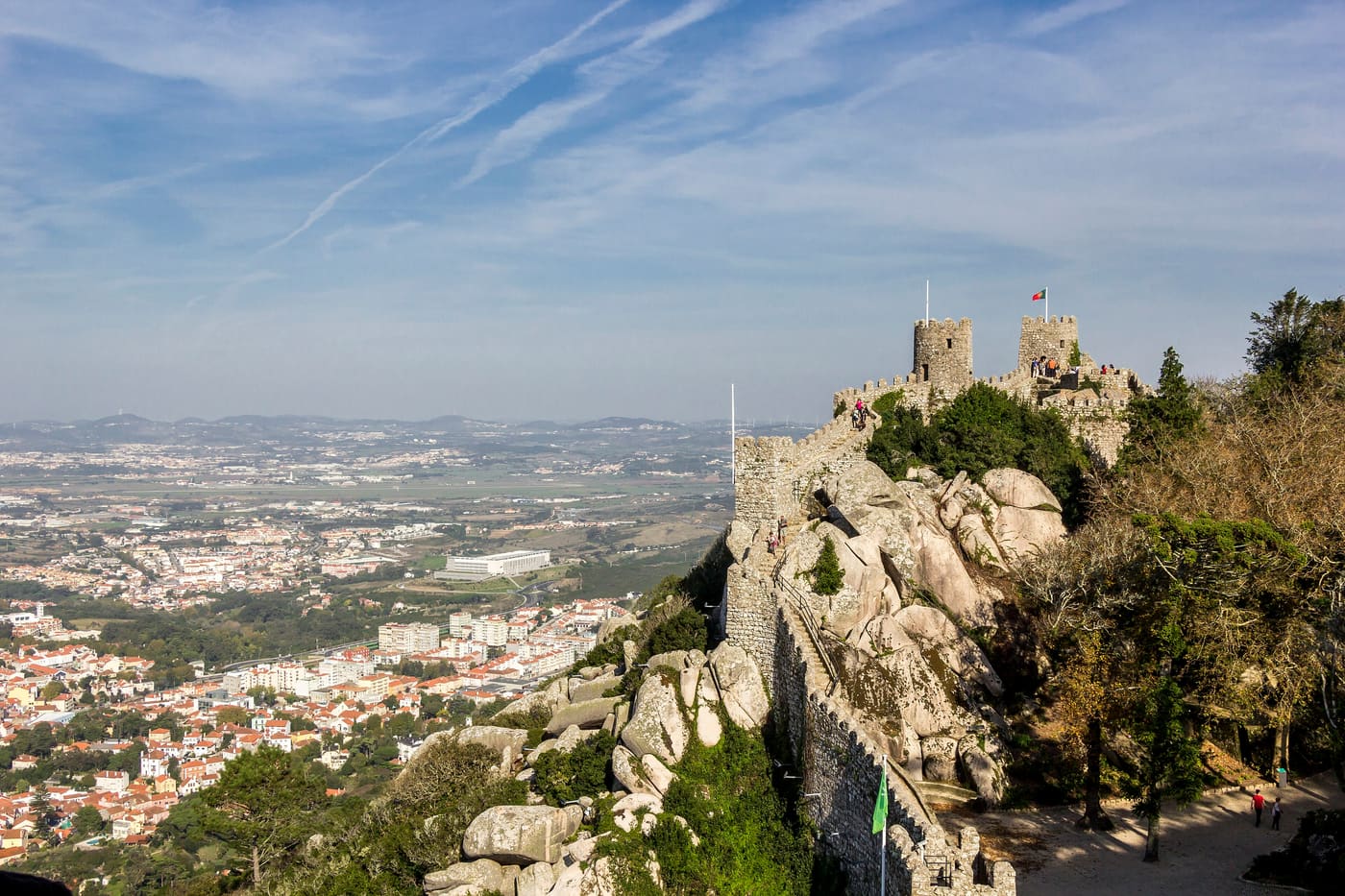
We walked around all of it. Which is, structurally speaking, most of it.
If you haven't been: Sintra is a green hill about half an hour west of Lisbon — a train from the city centre and you're there — where nineteenth-century Portuguese royalty and their wealthier friends built a cluster of romantic palaces on top of a much older Moorish fortress. It's the place Greeks describe to each other as "those Disney-looking castles near Lisbon", which is unfair, accurate, and the reason the queues exist.
Because that's the thing: it's a hill covered in palaces, each with its own entrance fee and its own line of people who will be standing in the same rooms as you at the same time. We went around them instead — the paths, the walls from the outside, the ridge, the views back down over the town and out to the sea. A full day, several castles, no tickets.
And then, down in the valley, the part of the day nobody had planned.
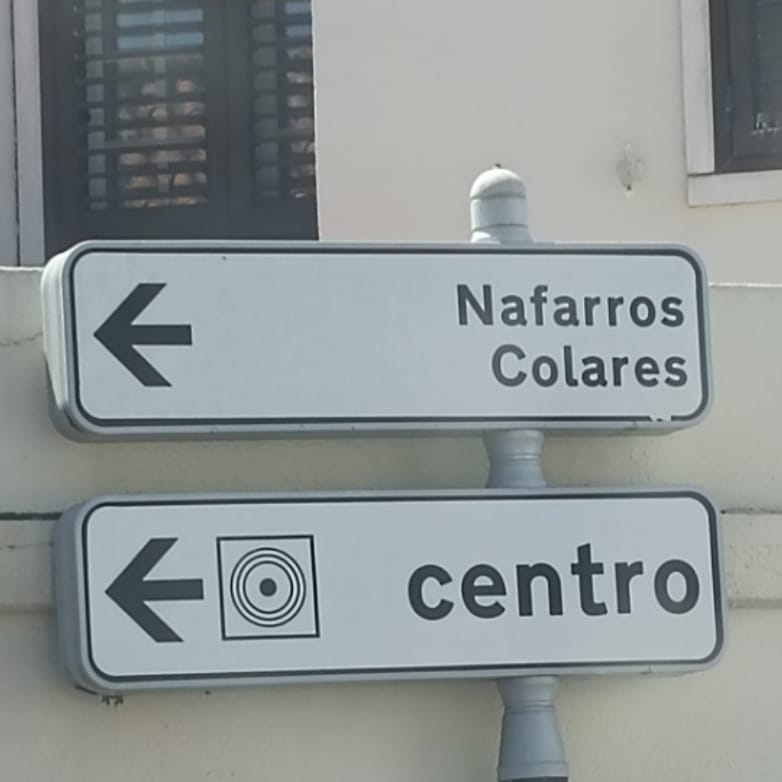
Colares. Say it out loud in Greek. I'll wait.
The village is called Colares, which is a historic wine region growing vines in sand a few kilometres from the Atlantic — and which, said out loud in Greek, is not a wine region at all. It is an enthusiastic comment about the size of someone's backside.
Nobody in the car cared about the history of the region's wine. We took the photo by the sign, drank a glass, and left.
7. It is, at this point, a collection
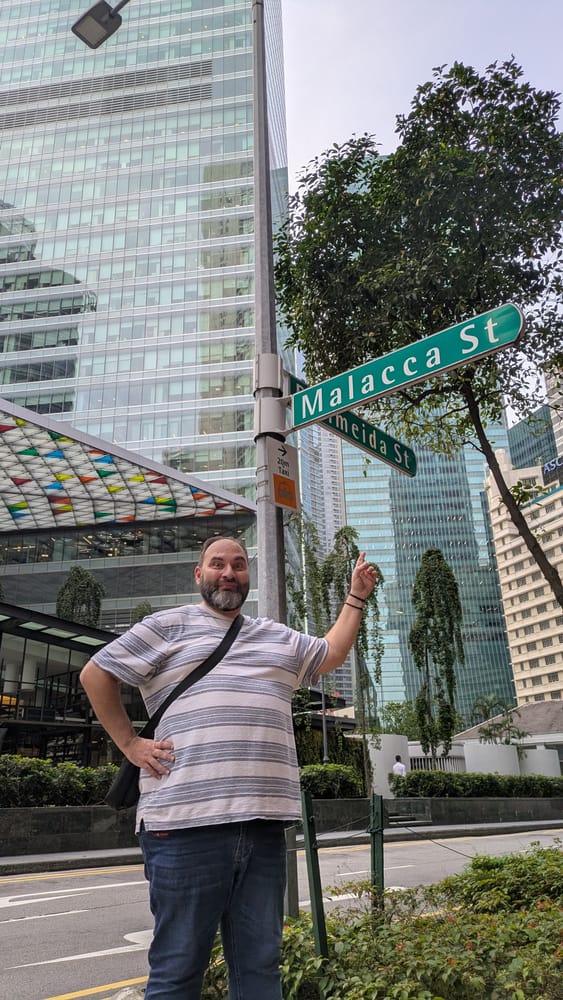
Singapore's financial district. Also a linguistic minefield. I regret nothing.
In Singapore's business district there is a perfectly respectable road named Malacca Street, after the strait. Every Greek reading this has already finished the joke, because one small vowel away sits the most versatile word in our language — the one that can mean insult, endearment, or punctuation depending entirely on tone.
Photo by the sign. Same as Colares. It's a collection now, and I take submissions.
8. The winery that made us late, and the passenger who took the blame
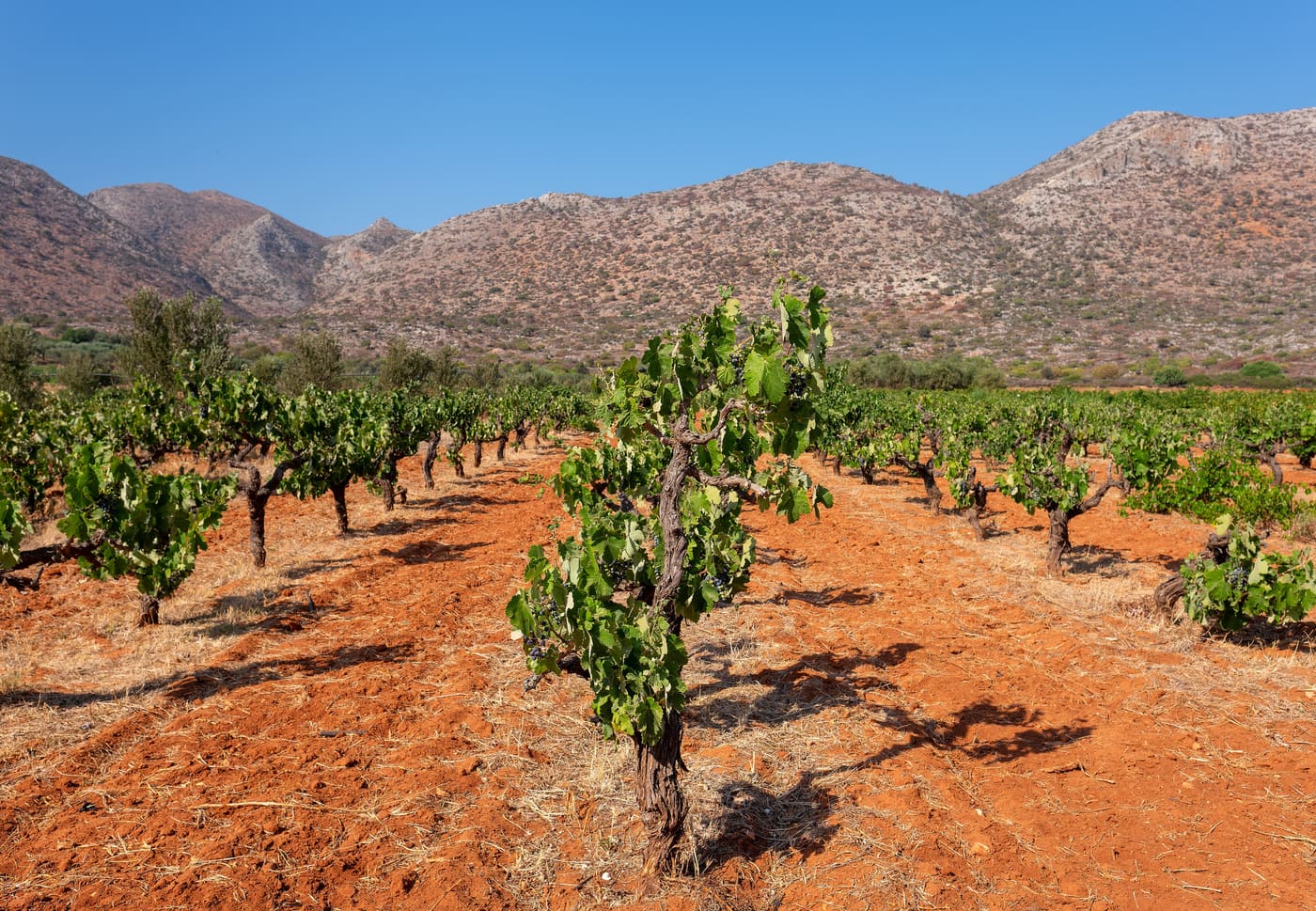
Crete. We had somewhere to be. We went here instead.
Driving across Crete, on a schedule, with a booking at the other end, I saw a small sign for a winery I had never heard of and turned in.
There was protest from the car. Legitimate protest — we were going to be late. So I did the only honourable thing available to a driver in that situation: I announced that the delay was entirely my responsibility, that any consequences were mine to absorb, and that we were going anyway.
It was superb. Small production, someone's family, wine you cannot buy at home, poured by a person who wanted to explain it. We arrived late. Nobody, at any point in the following ten years, has mentioned arriving late. They mention the winery.
The rule: stumbling onto something is the jackpot, and the schedule is a suggestion with good PR.
9. Fifty kilometres of island, one day, two wheels
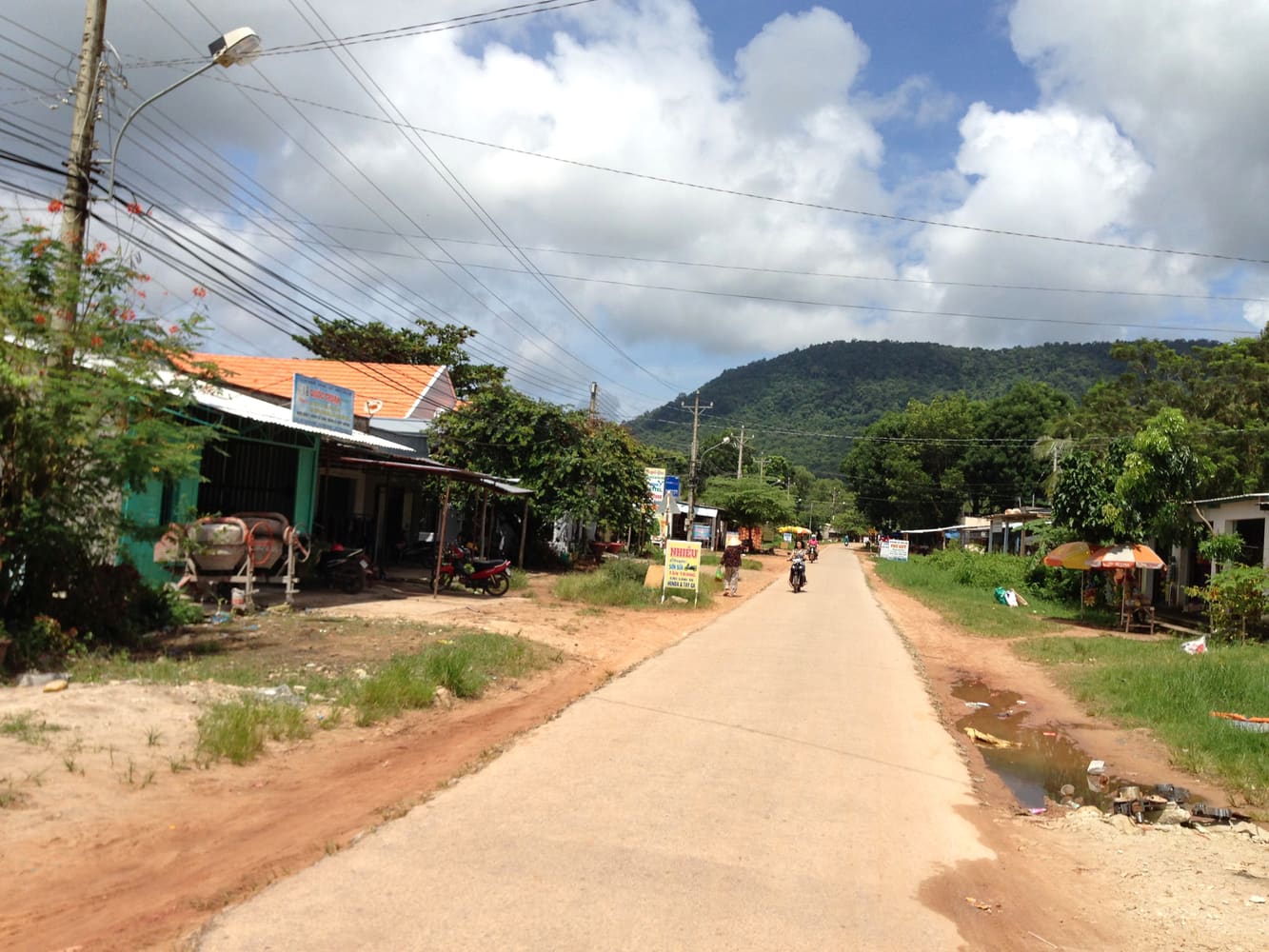
Phú Quốc. The whole island, top to bottom, in a day.
On Phú Quốc we rented motorbikes and rode the length of the island and back — somewhere around fifty kilometres each way, in a day, stopping wherever the island suggested stopping.
Down at the southern end there's a development everyone I know refers to simply as Fake Europe: a purpose-built Mediterranean seaside town, clock tower and pastel façades and all, dropped onto a Vietnamese island. We gave it a couple of hours — enough to walk it, get the vibe, and decide how we felt about it — and spent part of that walking out onto the Kiss Bridge.
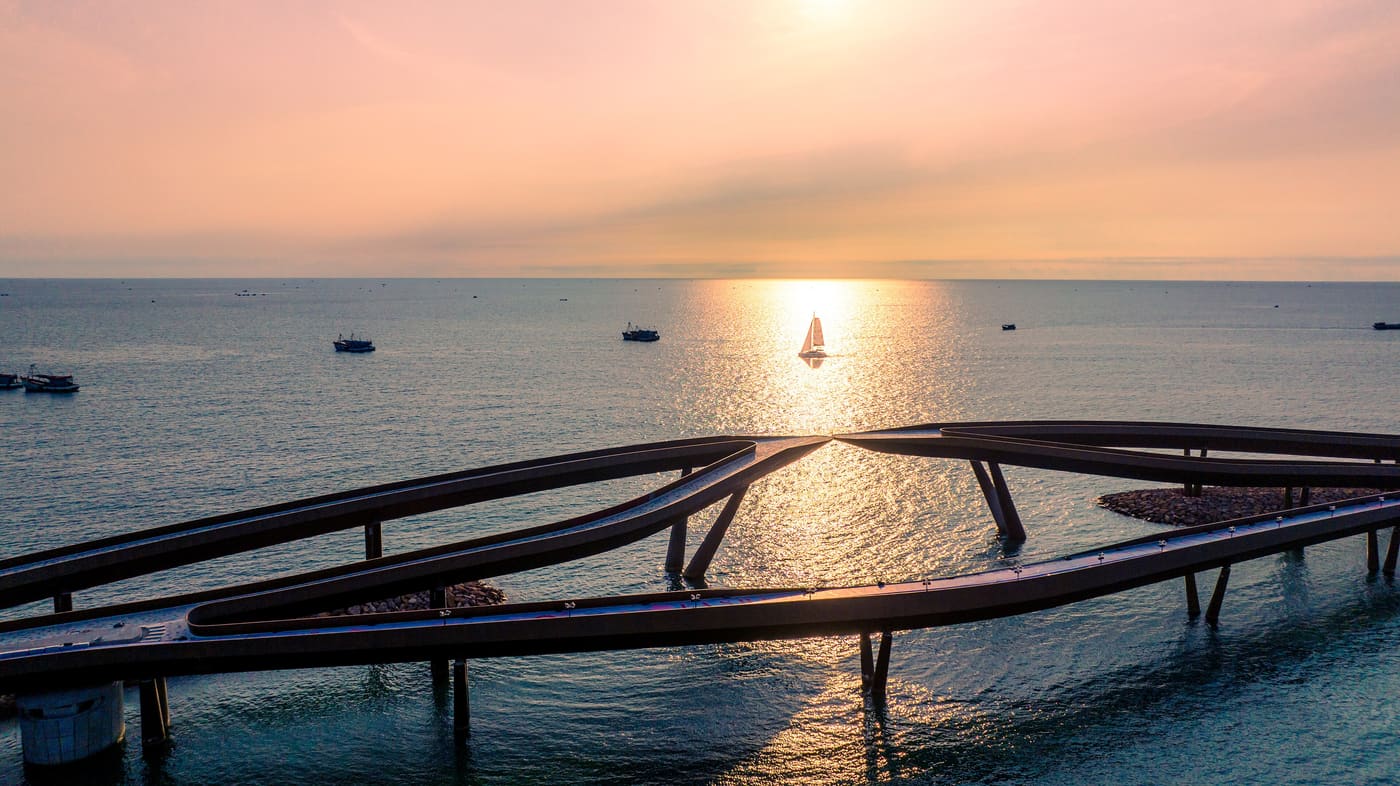
Two halves, one gap, and a very good sunset.
The bridge is two arms reaching out over the water and stopping just short of each other, so that a couple can walk to opposite ends and lean in for a kiss across the gap. I was there with a friend, so that was never happening. In fairness, had I been there with my girlfriend, I'm not certain it would have happened either — that's a long walk each, in the heat, to produce a photograph that requires a third person we did not have. We looked at the view instead, which is the honest reason to go: it isn't free, but it's a fraction of what everything else down there charges, and it's the only one of them I'd pay for twice.
Right up at the northern tip of the island is Starfish Beach, which is exactly what the name promises: shallow, warm, clear water with big orange starfish sitting on the sand. It was beautiful, and it was also the one place on the island that made me angry, because a steady stream of people were picking the starfish up for photos and — I wish this were an exaggeration — tossing them to each other. I said something. Loudly. More than once. Starfish suffocate out of water; a souvenir photo is not worth an animal's life, and this is roughly where my patience ends.
You cannot cover an island like that from a tour bus, and you certainly cannot do it from a sun lounger. Renting the bike (or the scooter, or the bicycle) is the difference between visiting a place and actually covering it, and it's almost always the cheapest line on the whole trip.
The rule: rent the thing with wheels. Then use it badly, on purpose — and leave the wildlife where you found it.
10. So I taught it to an AI
Every one of those stories is a preference, and preferences are exactly the kind of thing you can write down. So I did — and then I handed the whole set to an AI and asked it to do an impression of me.
It's called The B-Side, it lives inside PlanItShare, and its motto is "not the top 10". You answer nine quick either-or cards, tell it where you're going and when, and it comes back with a list built the way I'd build one: where locals eat, what to see sideways, which famous thing to skip and what to do instead, and never, ever a recommendation justified by a star rating.
It also argues with you a little, which is the most faithful part of the impression. If you tell it you actually want the museum, the full beach day, and the dancefloor, it will give you those — chosen its own way. And it will not recommend anything with an animal in a costume.
If you want the longer version of the taste behind it, there's a whole page about that inside the app. And if you'd like a list for wherever you're going next — come aboard, it's free, and the goats are optional.
Image credits
The noodle bowl, the tea, the goats, the Colares sign and the Malacca Street pose are mine — taken badly, on the spot, exactly as described. For the trips where I came home with a great story and no usable photograph, these are freely licensed images from Wikimedia Commons, by people who were there with a better camera and more patience, reused here with thanks:
- Heathrow Terminal 2 — IIya Kuzhekin, CC BY 3.0
- Sagrada Família from Plaça de Gaudí — Enric, CC BY-SA 4.0
- Castelo dos Mouros, Sintra — Shooterb9, CC BY-SA 3.0 ES
- Vineyard near Stavros, Crete — Jules Verne Times Two, CC BY-SA 4.0
- Road on Phú Quốc — trungydang, CC BY 3.0
- Kiss Bridge, Phú Quốc — Vivu Vietnam, CC BY-SA 4.0

,_fa%C3%A7ana_del_Naixement_i_estany_de_la_pl._Gaud%C3%AD.jpg)

_julesvernex2.jpg)


Comments
No comments yet — be the first.